Mercer Culinary M23510 Renaissance 8-Inch Chef's Knife Review (2026)
Updated September 14, 2026 · Research-based review
Our verdict
This Mercer Culinary Renaissance suits a cook who wants a forged, full tang chef's knife with real heft at a more accessible price than premium German brands. NSF certification and a Delrin handle make it a common culinary school pick, though the heavier forged blade can tire hands during long prep sessions.
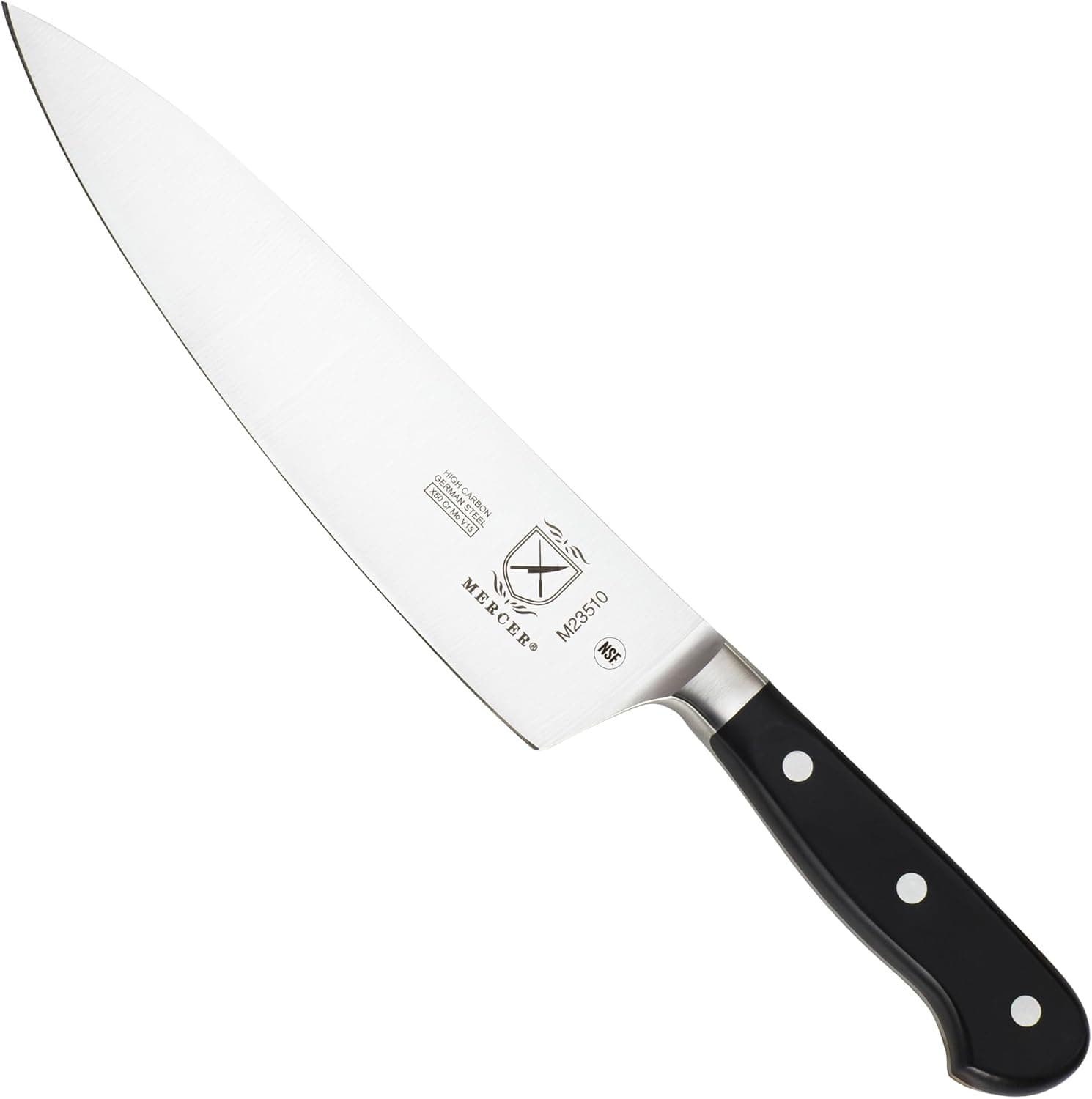
Mercer Culinary M23510 Renaissance 8-Inch chef's knife with forged German steel style construction.
Price range: $ (Budget)
What we liked
- + Renaissance line features a forged blade for good heft
- + Mercer is well regarded in culinary schools
- + Balanced weight makes rocking cuts smooth
Trade-offs
- - Heavier blade may tire hands during long prep days
- - Bolster design requires care when sharpening
Who this knife fits
This Mercer is aimed at a cook who wants the heft and balance of a forged chef's knife without paying premium German brand prices, which is part of why it is a common recommendation in culinary school kit lists. The 8 inch blade suits the same core chopping, slicing and dicing tasks as any standard chef's knife, and its forged construction gives it more weight and momentum through dense vegetables than a lighter stamped blade. Meal preppers doing large volumes of chopping will benefit from that added weight doing some of the cutting work, though anyone with wrist strain or smaller hands may find a lighter knife more comfortable over a long prep session. NSF certification also makes it a reasonable choice for anyone running a small commercial kitchen alongside home use.
What the build actually means
The blade is precision forged in one piece from X50CrMoV15 German high carbon stainless steel, the same family of steel used in many premium German knives, with a hardness around 56 on the Rockwell scale and a 50 50 symmetrical bevel edge ground at about 15 degrees per side. Full tang construction, where the steel runs the length of the handle, is triple riveted for stability, a build style associated with more durable, better balanced knives than partial tang alternatives. The handle is made from Delrin, a synthetic material chosen for its resistance to moisture and easy cleaning compared to traditional wood handles. Mercer backs the knife with a limited lifetime warranty, extended to twenty five years for corporate or commercial buyers, and it carries NSF certification confirming it meets sanitation standards for professional kitchens.
Living with it day to day
The forged full tang construction gives this knife noticeably more front heavy balance than a stamped blade, which many cooks find helps power through repetitive chopping with less wrist effort per cut, though it also means the knife itself weighs more to hold through a long session. The Delrin handle is easy to keep clean and resists the moisture absorption that can be an issue with traditional wood handles over years of use. Like other forged knives in this steel family, it benefits from regular honing between uses and hand washing rather than repeated dishwasher cycles, which can dull the edge and affect the handle over time. Its NSF certification signals it is built to hold up under the more demanding pace of commercial kitchen use, not just occasional home cooking.
How it compares with other chef's knives
Against the WUSTHOF Classic, this Mercer uses a similar family of German steel and a comparable forged full tang build, but typically costs less, making it a strong value alternative for a cook who wants forged performance without the WUSTHOF price tag. Compared to the Victorinox Fibrox Pro, a lighter stamped knife, this Mercer offers more heft and a different handle feel, with the choice mostly coming down to whether a cook prefers a heavier forged blade or a lighter, nimbler one. Against the Mercer Culinary Genesis, another forged option in the same brand lineup, the difference is mainly in handle shape and bolster design rather than the underlying steel. Its NSF certification and lower price than premium German brands make it a frequent pick for culinary students building their first serious knife kit.
Verdict and who should choose differently
For a cook who wants a forged, full tang chef's knife with genuine heft and NSF grade construction at a price below premium German brands, this Mercer Renaissance is a well regarded, practical choice, particularly for culinary students or anyone running a small commercial kitchen. A cook who prefers a lighter knife for long prep sessions or smaller hands may be more comfortable with the stamped Victorinox Fibrox Pro instead. Someone specifically drawn to a well known heritage brand name, and willing to pay more for it, might still prefer the WUSTHOF Classic, even though the underlying steel family and construction style are similar.
Frequently asked questions
What steel is the Mercer Culinary Renaissance made from?
It is precision forged from X50CrMoV15 German high carbon stainless steel with a hardness around 56 on the Rockwell scale.
Is this knife NSF certified?
Yes, it carries NSF certification, confirming it meets sanitation standards used to evaluate equipment for professional kitchens.
What is the handle made of?
The handle is made from Delrin, a synthetic material chosen for moisture resistance and easy cleaning compared to traditional wood handles.
What warranty does it come with?
Mercer covers it with a limited lifetime warranty, extended to twenty five years of coverage for corporate or commercial buyers.
Prices change often, so check the current price and availability on Amazon.
Check price on AmazonMeal Prep Gear Hub may earn a commission from the link above.